







Cart
Your shopping cart is empty! What is welding?
Times Read: 494 Comments: 0
What is welding?
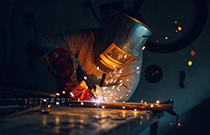
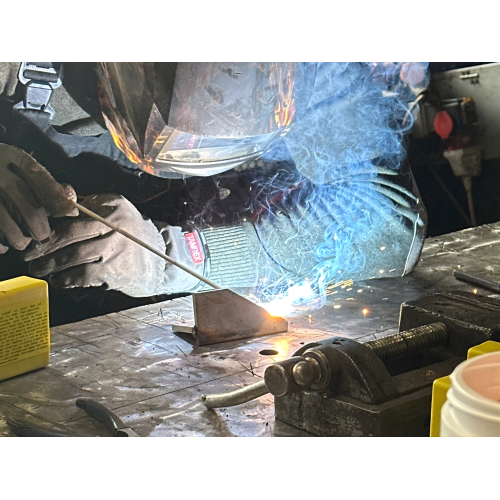
Welding is the process of joining materials in which they are heated to the melting point at the point of connection, creating a strong, unbreakable joint. A joining process that ensures a seamless structure of the materials of the parts to be joined, using heat, pressure, or a combination of both to create a permanent connection. It is widely used in various industries, such as construction, shipbuilding and ship repair, manufacturing in various industries, vehicle repair and more.
During welding, materials are heated to melting point or connected using pressure and, when cooled, form a stable connection. In some cases, metal filler is also used to fill the connection site.
The main types of welding:
- MMA / SMAW – Electric arc welding with electrodes:
- The electrode melts, and the metal forms a seam, while the coating gases protect the welding area from atmospheric influences. The main advantage – good yield with small investments.
- This technology is widely used in heavy industry, as well as in various repair and maintenance work.
- MIG / MAG (GMAW) – semi-automatic welding with electrode wire protective gases – inert (argon) or active (carbon dioxide) gases – in the environment:
- Widely used for welding steel, stainless steel and aluminum structures.
- MIG (Metal Inert Gas) - uses inert gas, such as argon.
- MAG (Metal Active Gas) - uses activated gas, such as CO₂ or mixtures.
- TIG (GTAW) - Tungsten inert gas (TIG) welding is a method known for precise joining of metals:
- Used tungsten electrodes to create a hot arc for melting metal, unlike conventional welding.
- Using a hand burner and protective gas, usually argon.
- It is used for welding stainless steel, aluminum, copper and other non-ferrous metals with a thickness of 0.3 mm to 4 mm.
- PAW - Plasma arc welding:
Plasma arc welding is a complex arc welding technique in which a concentrated plasma jet is used to melt and connect metals. It was developed as an achievement compared to TIG welding and can offer better accuracy and control.
- When using an electric arc as a heat source, the plasma arc creates a high temperature, as a result of which the cladding material melts and settles on the base material.
- Usually used in cases where there are increased requirements for the quality of the welded seam, for example, when welding high-alloy steels and titanium.
- Ideal for thin materials and micro welding.
- Gas welding (Oxygas welding) with rods:
- The distinctive properties of combustible gases determine their application.
- In gas welding, oxygen and combustion gas are used, which provides high temperature and controlled flame.
- Used in welding of non-alloy and low-alloy steel.
- In gas welding, acetylene and pure oxygen or odorized oxygen are basically used
- A traditional method that is still used in pipe repairs.
- Resistance welding (contact welding) - an efficient and fast way of connecting metal parts, in which materials are heated locally with electric current and the heated area is compressed, achieving a plastic or melted state:
- Automotive: The widest application – point welding of car bodies, panels and frames in mass production.
- Household appliances: Manufacture of refrigerators, washing machines, microwave ovens and other metal housings.
- Electronics and batteries: Connecting battery contacts (e.g. in power tools) and assembling precise parts.
- Hermetic tanks: Manufacture of fuel tanks, radiators and pipes using seam welding.
- Metal structures: Manufacture of reinforcing mesh, gratings and fences, as well as welding of nuts/screws to sheets.
- Laser welding - a method that uses a laser as a heat source. Melt part or all of the cross-section of the workpiece. And under certain conditions hardens to create an organic welding method.
- The principle is to use a laser beam to heat the workpiece to a melted state to create evaporation holes or melt pools.
- Mainly used for welding thin materials and precise parts.
- Used for high-precision and high-speed work in industries such as the automotive and aviation industries, medicine and electronics, where visually clean, durable seams without thermal deformation of the material are required
- Ultrasonic welding – a process in which parts are connected using high-frequency (20–40 kHz) mechanical vibrations. Unlike resistance welding, here heat is created by friction between molecules, and not by electric current.
Connecting plastic parts: Quick and clean assembly of cases, toys and packaging without glue or screws.
- Electronics and batteries: Connecting fine wires, chips and battery contacts without causing dangerous overheating.
- Medical and hygiene products: Hermetic production of face masks, filters and sterile packaging using high-frequency vibrations.
The choice of type of welding depends on:
- Type and thickness of material:
- Resistance welding is ideal for steel sheets (bodies, housings).
- Ultrasonic welding is best suited for thermoplastics and very thin, non-ferrous metals (foil, wires).
- Volume and speed of production:
- Both methods are designed for mass production. If it is necessary to manufacture thousands of parts per hour, fully automated resistive or ultrasonic equipment is chosen.
- Connection requirements:
- If mechanical strength is required for large structures, resistance welding is chosen.
- If purity and accuracy (medicine, electronics) or tightness without overheating of the material are required, ultrasound is chosen.
The technological weldability of materials and the integrity of the joint are determined by their set of physicochemical properties, where the metallurgical compatibility of phase transitions, the difference in thermal expansion coefficients and oxidation kinetics are decisive, which directly affects the risk of formation of crystallization cracks and the concentration of residual stresses in the seam. Variations in thermal conductivity and specific resistance determine the required energy density for local melting, while chemical heterogeneity of alloys can create layers of brittle intermetallic compounds, which significantly limits the applicability of traditional thermal fusion processes to specific combinations of metals.
Metals that can be welded:
For traditional and industrial welding processes, metals with good technological weldability are best suited, which ensures a stable joint structure and a minimum risk of defects.
Low-carbon and low-alloy steels are most widely used for welding, as they have a low risk of cracking and a predictable thermal reaction. Steels with a higher carbon content require preheating to prevent fragility of the structure. Stainless steel is well weldable, but requires precise control of the heat supply in order to maintain the anti-corrosion properties of the seam.
Of the non-ferrous metals, aluminum and its alloys are most often welded, although they require a specific protective gas environment or alternating current for the destruction of the oxide layer. Copper and its alloys (for example, brass) are weldable, but their high thermal conductivity requires a high concentration of energy, while titanium is weldable only in an inert gas atmosphere to prevent its fragility under the influence of air.
- Steel - (carbon and alloy):
- Low carbon steel: The most widely used and easiest to weld type with excellent joint strength and minimal risk of cracks.
- Alloy steel: Requires special temperature control (heating and slow cooling) to prevent the metal structure from becoming brittle.
- Stainless steel: Weldable well, but requires precise heat management to avoid deformation of parts and maintain anti-corrosion properties.
- Aluminium and its alloys:
- Oxide layer: The surface is covered with a solid Al₂O₃ film with a very high melting point (~2000°C), which must be mechanically cleaned or washed using alternating current (AC) before welding.
- High thermal conductivity: Aluminum removes heat from the welding area very quickly, so high energy density and often preheating of the entire part is required.
- Risk of porosity and cracks: The material is very sensitive to hydrogen and impurities that can create pores or hot cracks during cooling, so a particularly clean protective gas (Argon) environment is required.
- Copper and bronze:
- Extreme thermal conductivity: Copper conducts heat up to 10 times faster than steel, so very high current power and often preheating of the entire part (up to 300-600°C) are required to achieve melting at all.
- High fluidity: In the molten state, copper and bronze are very liquid, which makes it difficult to form vertical or overhead seams, so they are usually welded only in a horizontal position.
- Chemical activity and pores: The metal easily reacts with oxygen and hydrogen, forming gas bubbles (pores) during cooling, so a protective gas of the highest degree of purity (Argon or Helium) is required.
- Titanium:
- Gas absorption and brittleness: Titanium absorbs oxygen, nitrogen and hydrogen from the air at high temperatures (above 430°C) as a "sponge", which makes the weld fragile and unusable.
- Absolute protection: Perfect protection of inert gas (usually Argon) is required, not only for the welding bath, but also for the hot bottom of the seam and the already fixed, but still hot seam.
- Surface sterility: Before the process, the elimination of a chemical or mechanical oxide layer and any fatty substances (even fingerprints) is mandatory to avoid contamination and porosity of the seam.
- Nickel and its alloys:
- Welding nickel and its alloys (for example, Monel, Inconel, Hastelloy) is critical in the chemical and aviation industries due to their heat resistance and corrosion resistance.
- Low fusion depth control: The nickel melt bath is "wilted" (poorly flowing), making it more difficult to achieve full root melting and requires precise burner control.
- Risk of hot cracks: The material is sensitive to impurities of sulfur, phosphorus and lead, which causes cracking during cooling, so sterile cleanliness is required before welding.
- Heat impact zone: Nickel alloys are susceptible to overheating, which can reduce their corrosion resistance, so welding should be done with low heat input and rapid cooling.
- Cast iron
- Thermal cracking: During rapid heating or cooling, cast iron tends to burst, so the part must either necessarily be heated to 300-600°C ("hot welding") or welded with very short seams, preventing the metal from heating up ("cold welding").
- Structural changes: Too fast cooling in the weld area creates "white cast iron" – an extremely hard and brittle layer, which is then impossible to process with a drill or milling cutter.
- Special materials: Electrodes with a high nickel content are used for a quality connection, as they are more plastic and are able to absorb the internal stresses of the metal, not allowing the seam to break.
- Magnesium and its alloys:
- Risk of ignition: Magnesium shavings and fine particles can easily ignite, so the process requires strict temperature control and a sterile working environment to avoid fire hazards.
- Oxide layer and porosity: Similar to aluminum, magnesium is covered with an oxide film that must be crushed by alternating current (AC), but magnesium is even more sensitive to hydrogen, which can cause pronounced porosity during cooling.
- Low melting point and deformation: Since magnesium melts at relatively low temperatures (~650°C) and has a high coefficient of thermal expansion, parts deform very rapidly during welding or can "float out" (melt through).
Metals that are difficult or impossible to weld:
Metals are usually difficult to weld due to their chemical properties, high thermal conductivity or oxidation. Welding difficulties are determined by a combination of factors, including material properties, common design, welding environment, and process requirements.
- Galvanized steel:
- Zinc evaporates during welding (Evaporated zinc creates bubbles in the welding bath)
- Weldable, but the zinc coating emits toxic vapors, which makes the work dangerous, therefore, ventilation and protection are required.
- Lead:
- Lead melts already at ~327 °C, so during welding it quickly overheats and becomes difficult to control: easily melts through, difficult to keep shape, unstable welding process
- Lead is a very soft metal, so the weld site is not strong enough: easily deformed, low strength, the joint is not durable. Usually used in soldering, not welding.
- When throwing lead, harmful vapors are released, which can lead to lead poisoning: when inhaling dangerously, ventilation is required, protective equipment must be used
- Volframs:
- Tungsten melts at ~3422 °C, which is one of the highest temperatures among metals: a very high temperature is required, it is difficult to ensure uniform melting, requires special equipment.
- Tungsten is a hard, but also fragile metal: easily cracks during welding, poorly withstands thermal stresses, requires heating.
- At high temperatures, tungsten oxidizes easily: oxides are formed that damage the seam, protective gas (for example, argon) is required.
- Zinc and its alloys:
- Zinc melts at ~419 °C and begins to boil already at ~907 °C. It evaporates quickly during welding, which makes it difficult to control the process, as a result of which gases and defects are formed.
- Evaporated zinc creates bubbles in the welding bath, as a result of which pores are formed, strength decreases, and cracks are more likely.
- When welding zinc or its alloys, harmful fumes are released, which can cause metal smoke fever, dangerous inhalation.
- Plasticised and porous metals (e.g. some combination of alloys):
- Plasticized and porous metals (for example, various alloys) are often not uniform in composition. In one material different melting points, and melting is uneven, resulting in difficulties in obtaining a quality seam.
- Due to the porosity of the structure, gas accumulated during welding and voids and holes are formed, which reduces mechanical strength.
- Plasticized materials can change their properties under the influence of temperature. They are deformed during welding, voltage is formed, and there is a high risk of cracks after cooling.
- Chromium in its pure form:
- Chromium melts at ~1907 °C, so welding requires a very high temperature, which makes it difficult to melt the material evenly and makes the process difficult.
- Pure chromium is a hard but fragile metal, so during welding it easily cracks and poorly withstands the thermal stresses that occur during the process of heating and cooling.
- During welding, chromium reacts with oxygen and forms oxides, which impairs the quality of the seam, so a protective gas is needed to reduce the formation of defects.
- High carbon metals:
- Metals with a high carbon content (for example, high-carbon steels) are very sensitive to cracks during welding, since a sharp change in temperature creates internal stresses.
- High carbon content contributes to the formation of a solid and brittle structure after cooling, which reduces the resistance of the material to loads.
- Welding such metals requires special treatment, such as preheating and controlled cooling to reduce the risk of defects.
What affects the likelihood of welding?
- Oxidation: Some metals, such as Aluminum and Titanium, oxidize very quickly; At high temperatures, a stable layer of oxide forms on their surface, which interferes with the bonding of metals and can create a poor-quality seam, which requires thorough cleaning of the surface and protective gas.
- Thermal conductivity: Metals with high thermal conductivity, such as Copper, quickly dissipate heat from the welding area; This makes it difficult to reach and maintain the required temperature, increases energy consumption and can lead to insufficient melting.
- Metal alloys: Some alloys may be incompatible with each other; Different melting points, chemical composition and structure can lead to uneven melting, the formation of brittle phases or cracks, which significantly reduces the strength and quality of the weld.
Comments